Showing posts with label Chinese. Show all posts

Thursday, November 18, 2010

Song of Yue - Song Lian

Better known for his prose and role as a high court-official in the administration of the first Ming Dynasty Emperor, Song Lian was also charged with compiling the official history of the previous dynasty (Yuan).  This little poem comes by way of a small book of Chinese love poems edited by Qiu Xialong, about whom I've written earlier.  This streak of Chinese poems is not entirely intentional.  Tonight, I read poetry by Mary Oliver and several Brazilian poets looking for one that would be appealing, but was not successful.  

I chose this one for its perfect use of a pair of scissors to express separation and joining.  It's so simple, so elegant..... and written almost 800 years ago!  I am continually mindful of how emotional states know no boundaries of time or culture.  We yearn, we love, we mourn the same way, irrespective of time and place. 

-------------------------------------------------

Song of Yue
                            transl. from Chinese by Qiu Xialong

It is not just a day or night that I have
missed you, Lord.
It is like a broken pair
of Bingzhou scissors –
one blade is far in the south, and the other,
far in the north.
When can the pair
be joined to cut out a wedding gown?

                                                    Song Lian  - Chinese 1310-1381

Tuesday, November 9, 2010

Reply to "Phoenix Hairpin" (to the tune of) - Tang Wan

This is the only translation I could find (from The Anchor Book of Chinese Poetry) of Tang Wan's poem in reply to her ex-husband Lu You's poem.  (See two postings below.)  There is something unsatisfying about it: I can't tell whether it's the poem or the translation.  Somehow, given how she must have felt, the fullness of her feelings doesn't come across.  There is flame but little heat and I can't believe that is how it was for her.  The sorrow of a love torn asunder, a love big enough to kill her less than a year after that meeting: it just doesn't come through strongly enough.  We know his broken heart lasted the rest of his life, another forty years, but that's what a great love will do. I wonder, if given the option of a short or long life after a loss like that, which would be the easier.  But we are not given that choice.  I know.

Addendum: Jan. 22, 2011.  Since no longer being able to add more poems after the fire of Dec. 21., I have been "visiting" poems whose physical copies burned.  I feel that I have done Tang Wan a disservice with my original remarks.  I see her sorrow now as so deep, so profound that it's past the stage of torrents of tears and words.  She is now at a place where what remains is the bleakness of the loss and a vocabulary of images as stark and limited as her life.  I remember reading somewhere that the purest truths are said in the shortest sentences and with the simplest of words.  (No, not Hemingway.)  Read with that in mind, I can feel her devastation in my marrow.  Contrast it with his, forty years after that chance encounter... and leave me a comment.)
----------------------------------------

 Reply to “Phoenix Hairpin”  (to the tune of)  -  Tang Wan

Human relationships are short.
Human intentions are evil.
When rain accompanies evening, flowers fall easily,
but morning wind is dry.
Tearstains remain.
I want to write you my feelings
but I only whisper to myself, leaning against banister.
Hard!  Hard!  Hard!

We are separate.
Today is not yesterday.
My sick soul moves like a swing between us.
A cold blast from a horn.
The night is late.
Afraid of questions,
I swallow my tears and smile.
Hide!  Hide!  Hide!

                                                             Tang Wan - dates unknown, Song Dynasty ,

Wednesday, November 3, 2010

The Shen Garden - Lu You

 This is the poem that Lu You wrote forty years after the chance meeting with his beloved, Tang Wan, as described in the previous posting (Nov. 2nd).  The translation is by a very interesting person, Qiu Xiaolong, a Chinese-born poet/professor at Washington University who writes in both Chinese and English, as well as translating T.S. Eliot (!) and others into Chinese.  Qiu is also the author of a detective story series set in modern day Shanghai: they are a great read as both social commentary and a good crime yarn.  I highly recommend them.  (The first one is called "Death of A Red Heroine" and this is a link to a review of it.)

As previously noted, translations are tricky business, even between languages from the same "family", like the Romance languages.  (As close as Italian, Spanish, and Portuguese are to each other, I've seen some terrible choices migrating a poem from one to the other.)  Going from a pictograph-based language like Chinese to English takes amazing skill and double sensitivity to intent and result.  Simply, it takes another poet, but a poet aware of his own ego, limitations, and biases.  Of the translations I have read, this one fulfills the task the best.

When revisiting the past by recalling a memory, nothing has aged.  Going back to a physical place, one must be prepared for the opposite, and the consequences depend on one's preparation and expectations.  In this poem, Lu appears to have been ready and thus not jarred by the changes: his tone is observational and accepting, not questioning or raging.  Someday, I hope to be that way myself about the past.
------------------------------------------

The Shen Garden
                                    transl. by Qiu Xiaolong
I

The sun is sinking behind the city wall
to the sad notes of a shining bugle.
In the Shen Garden,
the pond and the pavilion appear
no longer to be the same,
except the heart-breaking spring ripples
still so green under the bridge,
the ripples that reflected her arrival
light-footed, in such beauty
as would shame a wild goose into fleeing.

II

It’s forty years since we last met,
the dream broken, the scent vanished,
in the Shen Garden, the aged willows
produce no more catkins.
I’m old, already turning into the dust
of Mount Ji, when I shed a drop of tear
at this old scene.
                                                      Lu You – 1125-1210

Tuesday, November 2, 2010

"Phoenix Hairpin" (to the tune of) - Lu You (Song Dynasty)


Lu You, one of the four great poets of the Southern Song Dynasty, was also half of one of the great Chinese love storiesThat story has: a childhood true love leading to marriage; a disapproving and jealous mother-in-law; lovers forced to split up; a bittersweet - and brief - reunion; and a tragic death.  All of it memorialized in poems - now almost 1,000 years old! - by the participants, poems that can be seen inscribed on the walls of the place where the key event occurred.  (No wonder the story has been made into at least one TV show...)

The love of Lu's life was his cousin, Tang Wan.  They had grown up in the same household and wedded when he was twenty, but married life lasted only one year, as his mother never liked Tang and forced Lu to cast her out and divorce, which he did out of filial duty.  Lu moved away to continue his studies and a career of many ups and downs whose focus was regaining northern China for the Song Dynasty.  (Lu You is known as the "Patriotic Poet" for his many poems - several thousand of  which survive - urging the unification of China.)


Almost ten years after the divorce, Lu had a chance encounter with Tang Wan and her new husband during a visit to the Shen Garden (in modern day Shaoxing).   Societal rules did not allow them to speak directly, but she received permission from the husband to have contact.  The sources I've read conflict on whether she sent a servant to him with wine or handed him the cup herself.  Regardless, it is said her eyes were brimmed with tears, that he got drunk on the wine, and then composed immediately this poem on a wall of the Garden.  

Later, Tang saw the poem and wrote one in reply, also on the wall.  And there the poems are today, side-by-side.


She died, many say of a re-broken heart, a year after that brief, public reunion.  She was only twenty-nine years old.  Twenty-nine years old.


In 1199, some forty years later, when he was seventy-five years old, Lu You revisited the garden and wrote two poems - "Shen Garden" - recalling the event.


This poem is in "Ci" form, which are meant to be sung.  A tune is selected first, to which words are then written.  It is not uncommon for different poets to use the same tune but write different verse to fit it.

I am a sucker for tragic love stories, hence the selection.  It takes no effort at all for me to dive into their pain.
---------------------------
 “Phoenix Hairpin” (To the Tune of)
 
Pink soft hands, yellow rippling wine,
The town is filled with Spring, willows by palace walls.
The east wind is biting, happiness is thin,
heart full of sorrow, so many years apart.

Wrong, Wrong, Wrong!

Spring is as of old; the person is empty and thin.
Traces of tears show through the sheer silk.
Peach blossoms falling, glimmering pond freezing,
The huge oath remains, the brocade book is hard to hold.

Don't, Don't, Don't!


                                                             Lu You -  1125 – 1210, Song Dynasty
 
Note: This poem also shows how hard it is to translate poems from Chinese.  The forms are SO different, each character's meaning so rich that it needs, in English, several words to explain.  The triple "wrong" meant that it was wrong for them to end up apart; wrong of his mother to drive her away; and wrong of him to obey mom and leave Tang. “East Wind” refers to his mother and the rules that made him obey her wishes.  He and Tang are the willows separated by the palace wall, ie. the rules that didn't allow them to talk directly.  The tears on the silk are her tears from their encounter.  The “brocade book” refers to his work and career.
 
----------------------------------------------------


Saturday, October 30, 2010

"Clean and Even Music" (to the tune of) - Emperor Li Yu

 Li Yu, the last Emperor of the Southern Tang Dynasty, only ruled for fourteen years, but during his reign, his support of the arts made his kingdom an important cultural center.   Personally talented as a musician, painter, and calligrapher, he is recognized for his contributions to a lyric form of poetry which the succeeding Song Dynasty further developed.  It was also a poem that caused his death at the age of forty-one, when he was ordered to drink poisoned wine by first emperor of the Song Dynasty, who had conquered and imprisoned him.  (Li's poem, to the tune "Beauty Yu", had been sung by the Song Emperor's own female court musicians!  Not hard to see how that could have annoyed him....)   I include here as it is a - real - killer of a poem....

Today is also the anniversary of my father's passing, eleven years ago. He suffered a massive heart attack and died in a hospital emergency room with me at bedside.   He was eighty-four years old at the time.  I chose the poem below because lamentation for a loss applies also to filial love.  And because the line about someone being so far away that not even a dream can reach them is particularly meaningful: he is infrequently now in my dreams, though I think of him regularly and keep his memory.  I miss him and am now more glad than mortified when I recognize him in how I speak or laugh a certain way sometimes.
--------------------------------------------------------------------

 “Clean and Even Music”  (to the tune of)

Since you left, Spring is half gone
and everything I see breaks my heart:
a chaos of plum petals falling by steps like snowflakes.
I brush them off and they cover me again.

Migrating wild geese bring me no word of you.
The road is so long that my dream cannot reach you.
The grief of departure is like spring grass
-- the farther you go, the deeper it grows.

                                                                       Emperor Li Yu (aka Li Houzhu “last ruler”)

And the killer poem:


"Beauty Yu:  (to the tune of)

 Will Spring blooms and autumn never end?
These memories are too much.
Last night east wind pierced my narrow tower again,
and I saw lost kingdoms in the clean bright moon.
The carved railings and jade steps must still be there,
though lovely faces must have aged.
How much sorrow do I feel?
Like river water in spring, it flows to the east.


Wednesday, October 20, 2010

Nineteen Ancient Poems - #2 - Anonymous (Chinese)


 The "Nineteen Ancient Poems" are the earliest extant poems in the five-character meter that was the longest lasting form of Chinese poetry.  They date back almost 2000 years, author(s) unknown.  Translations, as I keep repeating, are - at best - like seeing an object through a prism, at least in terms of getting at the essence of the original.  There have been different schools of thought about translating from the Chinese, from rhyming and meter schemes that simulated and emulated the original, to the one below, which attempts to capture some of the rhythm and sing-song repetition in the original.  Over the years, my yard-stick is whether it conveys the overall atmosphere and tone by which our emotional reaction is created.  For me, this one succeeds and that's why it's included: that sorrow and moodiness of a loss observed and felt is a theme that recurs in later Chinese poetry.  Remember: this was written almost 2000 years ago....
----------------------------------------------------------
Nineteen Ancient Poems - #2

Green, so green is the river grass,
thick so thick are the garden willow’s leaves.
Beautiful, so beautiful is the lady upstairs.,
shining as she stands by the window, shining.
Pretty in her powdered rouge, so pretty
with her slender, slender white hands.
Once she was a singing girl,
but now is the wife of a womanizer.
He travels but rarely comes home.
So hard to sleep in an empty bed.

                                Anonymous – Chinese, Han Dynasty, 206 BCE – 220 CE

Friday, August 20, 2010

Forever Parted: Graveyard. - Gu Cheng

Walking on East 41st St. just east of Fifth Avenue, this poem stared up at me as I stared down at my feet.  Embedded on the sidewalk, it’s one of 96 such plaques with poems and literary quotes selected in the 1990s and placed there on the two blocks leading to the New York City’s main public library - the one with the famous flanking lions.  


I couldn’t recall either the poet or the poem but it connected, as it had that very Chinese “voice” and language that is so appealing: deceptively simple in imagery yet complex in how it joined disparate ones.  I was intrigued, especially as his birth-year (1956) would make him my generation.  Was he a Chinese-American, born there or here, but writing in English? A Mainland Chinese still there (or here) translated into English?  Researching led to the unexpected.

First, the plaque needs to be updated: Gu Cheng (male) died on Oct 8, 1993, in New Zealand, hanging himself after having killed his wife with an axe.  They - her name was Xie Ye - had immigrated to New Zealand after leaving China in 1987, after he had become a literary celebrity following the end of the Cultural Revolution.  A prominent member of a group of modernist writers (“The Misty Poets”, a pejorative - meng dong - by the authorities meaning “obscure” or “hazy” ), his poetry was well-known and popular, his poems being both surreal and grounded in every day life and appealing to a generation tired and disaffected by the dullness and propaganda of official writers..  

A poet’s death, particularly one with the tabloid drama of a murder and/or suicide, will always add an * to their work, becoming an unavoidable filter or lens through which it will be interpreted.  I only knew the poem and the poem met my criteria for inclusion.

As for the poem itself, picture the poet, in loss and mourning, visiting the grave of the loved one, unable to use his medium and the tools of his trade to express…


Saturday, June 5, 2010

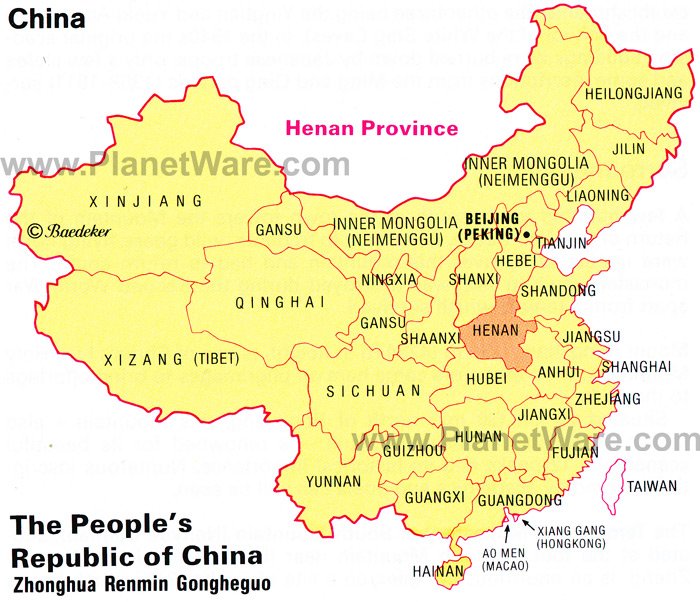
Gifts - Song from ancient Wei (modern Henan)

-->
 I found this in a bilingual Chinese publication "Selections from The Book of Poetry", in the section of folk Songs, all translated by Prof. Xu Yuanchong (1921 - ?).  "The Book of Poetry" is THE book of poetry, China's first ancient poetry collection, compiled around the 6th Century BCE (Before Christian Era), around the same time as the Illiad and the Odyssey.  The compiler is attributed to be Confucius (!) and the 305 poems selected by him from the several thousand known in his time.  This book, along with five others (on rites, music, changes, ancient texts, and the Spring and Autumn Annals) are the "Six Classics" he used as textbooks for his disciples.  (Aside: one reason for the decline of China is that the imperial civil service examinations continued using those classics as their basis INTO THE 19th century!  Thus, China's best and brightest were selected by their ability to expound on 2,500 yr old texts, while knowing DIDDLY about modern technology, administration, etc. Oy veh!)  This folk song comes from the river valleys of Henan Province and at least as old as when it was selected (2,500 years ago).  Prof. Xu, the translator,  taught at Peking University, was educated in China and in Paris, and is a noted translator of Chinese texts into English and French as well as in the other direction.  (He translated, among others, "Madame Bovary" into Chinese and the poems of Mao Tse Tung into English.)  His bio states that he is "...proclaimed as the only expert in the world who can translate Chinese poetry into English and French rhyme.."
----------------------------------------------------
Gifts - Song from Wei, modern Henan Province, China
                                
                                                                             transl. by  Prof. Xu Yuanchong

She throws a quince to me;
         I give her a green jade
Not in return, you see,
         But to show acquaintance made.

She throws a peach to me;
         I give her a white jade
Not in return, you see,
         But to show friendship made.

She throws a plum to me;
         I give her jasper fair
Not in return, you see,
         But to show love fore’er.

                                                           Songs collected in Wei, modern Henan

Friday, June 4, 2010

Four Songs - Tzu Yeh

 Some suggest that the group of 117 short poems known as the "Tzu Yeh songs" were authored by more than one person.  However, the compositional style of back-to-back couplets was new and suggest a single author.  As a "wine-shop girl", she would have been ".... trained in music, dance, calligraphy, history..." (Hamill), making her a very early precursor - by roughly 1,300 years - of Japanese "geishas".  I'm sure some doctoral student somewhere has done a cross-cultural comparison of female entertainers in ancient cultures - from the Greek hetaerae to "wine-shop girls" to geishas - and what was included in their range of offerings, from chaste to carnal.)  This grouping of Tzu Yeh songs first showed up in a compilation dating to the second half of the 4th Century A.C.E. (After Christian Era - the new "A.D.")  I've selected four of them for this posting: I may add others at another time.  (Sorry, no photo!)
---------------------------------------------------------
Four songs   
                                                  transl. from Chinese by Sam Hamill

The Lotus Lover

A green lotus on waves of transparent blue:
the flowers grow red and new.

You want to collect these lovely flowers?
I’ll give my lotus bud to you.


And End to Spring

Your leaving brought an end to spring;
longing burns through summer heat-waves.

Will I ever lift my dress for you again?
My pillow ever hold your lovely face?


A Smile

In this house without walls on a hill
the four winds touch our faces.

If they blow open your robe of gauze,
I’ll try to hide my smile.

Song

Winter skies are cold and low,
with harsh winds and freezing sleet.

But when we make love beneath our quilt,
we make three summer months of heat.

                                                                      Tzu Yeh - Chinese

Monday, May 3, 2010

Lines Written on a Wall of Dongliu Village - Xin Qiji

Xin Qiji (1140-1207) was a soldier-statesman-poet during the southern Song Dynasty, when "China" was still beset by "barbarian" tribes from the north.  According to accounts, he gained and lost the emperor's favor several times as a strong proponent (and leader in the field) of military actions vs. appeasement of the invadersHe is considered one of the leading poets of the Song Dynasty.  (For more of his poems translated into English by various people, click here.)  The translator of this one is someone VERY interesting in his own right: a Chinese professor at Washington University in St. Louis who writes critically-acclaimed police-procedural novels - in English! - set in contemporary Chinahas translated English-language poets into Chinese, and writes poetry in both languages.  I've read some of his books and HIGHLY recommend them as being both good mystery stories and providing accurate insights into the conflicting forces in modern Chinese society.  (Click on his name below to go to his website.This poem's use of nature to set the stage for the back-story and that quality of longing and melancholy for something past that is (to me) very typical of Chinese love poetryJust the line about plucking a flower from the mirror as a simile for impossibility is worth the whole poem.  The poem would have been sung.  (Qingming Festival is in April and it's both a celebration of the beginning of Spring and the day for remembering the dead. Click on the name for a more detailed reading about the festival.)
-------------------------------------
Lines Written on a Wall of Dongliu Village

                                                                                transl. from Chinese by Qiu Xiaolong

Wild pear blossoms start falling again,
so soon, the Qingming festival over.
The cruel eastern wind, for no reason,
interrupts a traveler’s dream.
I awake, the brocade curtain
devastatingly cold. Once,
she held the drink to me
on the winding river bank,
and we bade farewell to each other
under a weeping willow tree
with my horse tethered to it.
Now, the pavilion deserted,
there is no trace of her,
only the swallows twittering about bygones.

She’s been seen, people say,
east of the bustling thoroughfare,
behind the curtain, still as graceful
as the new moon. Old regrets
run like the endless spring water. New griefs
pile up like the clouds over the mountains.
If we were going to meet again,
at a banquet, to tell her all this
would be impossible
as to pluck the flower from a mirror.
She would say, perhaps,
"How white your hair has grown!"
                                                                                              Xin Qiji - Chinese

Tuesday, April 27, 2010

Not A Love Poem - Tu Yun-Hsieh

Biographical info on Tu Yu-Hsieh (1920?- ) is hard to come by in English-language sources. Even the translator of this poem, who was a student with him at National Southwest Associated University in 1940, isn't certain of his birth-year. Soon after, Yu-Hsieh went from student-scholar to soldier in the Burma theater of WWII to fight the Japanese invaders. (He also was not just an ordinary soldier: he was a sniper, the most at-once-personal-yet-distant way to kill.) At the time (1962) of my source for the poem, Tu was still alive, so we know he survived the war. I'd be curious to know if he survived the Cultural Revolution (1967-1976) given that his poetry's influences and lyricism owed more to English writers, particularly W.H. Auden (who visited China during WWII), than to the Communists co-opting of culture for political purposes. (The beginning of the second verse is a bit awkward: I suspect it's from the translation, as the translator acknowledges having to "fill in the blanks" a bit in a number of them, in order to get the meaning across. I think that, here, it takes closer reading to get that he is talking about policing his inner self (the city) to control his jealousy.)
---------------------------
Not A Love Poem
                                                      transl. by Kai-Yu Hsu      

The mountains grow somber, and trees crowd together;
The flowers and herbs lose their colors.
My dear, more than ever are your eyes black
And gleaming, quickening my pulsation.
Please, won’t you move your lips again;
I long for more dizziness: We have,
In the gyration of the earth,
Carried with us many a brilliant galaxy.

Forgive me for again and again giving myself an order
And canceling the order, and again and again cursing
The shouting of the policemen on guard in the city
that threatens and complains in turns.
Now, my dear, let us only soar afar,
Let us melt, let us atone
For those impatient and unlucky tears
And that shameful bit of jealousy.

Let us be like those blossoms of light white clouds
That fly father and grow lighter, finally to disappear
In the calm blue. Man can never again
Gossip about their romance
As untamably wild. We shall
Lean together, reminiscing of our happiness while beautiful dreams
Circulate through the silent contact;
We’ll watch how the haze of the evening is quietly carried away.
                                                                                                                   Tu Yun-Hsieh - Chinese

Monday, April 26, 2010

Complaint - Sun Yu-T'ang

 Sun Yu-T'ang (1905? 1910?- 1985) was a member of the Crescent Group, a group of young Chinese writers who formed in 1923.  The historical context is important: China was in the middle of the Warlord Period between the end of the Empire (and creation of the Republic) in 1912, and the Japanese invasion of 1937.  There was turmoil and exuberance, a sense of "finally perhaps maybe possibly" being able to learn/use the energy and ideas of the West without being dominated by it, politically or otherwise.  Tradition in poetry, as in other parts of society, was being broken, and the writers in this group wanted to create new forms and ways to express new ideas.  In this, their attitudes toward love, beauty and life were closest to the Romanticcs (Keats and Byron were admired by several of the members).  A key development in the group was taking the musicality of every-day language and combining it with great structural rigor in their verses.  Obviously, most of this is lost in translation - sigh... - but not what one critic called "...the measured metaphors.." used.   (Note: Sun Yu-T'ang graduated from Tsing-Hua University's history department in 1933, the year my father entered as a freshman.  He's another poet from that period that my father probably knew about and read.)

This one is just a lovely, lovely poem with the kind of high-scoring leaps and landings in imagery that would win an Olympic medal.  Just that opening verse alone and how the entire poem takes place - literally! - in the blink of an eye.  Marvelous.
---------------------------------
Complaint
                                       transl. by Kai-Yu Hsu

Yes, you loved, just for that wink of an eye –
Like a swallow’s wing-tip touching the water,
A whiff of gentle breeze, leaving no shadow to be caught,
No light to be traced – like a flash of a falling star –

It was gone.  You did not mind at all,
But unthinking, untied my anchor chain.
thus on white sails, swollen with warm dreams,
I flew out of a river, across the sea, and soared over the hills,

Through blue clouds I darted into the depth of night,
Losing myself, and missing my road;
All because I took that instant to be eternity,
Thinking that the silver stars were your eyes.

Then you laughed, and that awakened me,
Awakened me to my earlier hasty belief.
But, ah, what do you want me to do now?
Now that you have slammed shut forever the door of my
          paradise.
                                                                               Sun Yu-T'ang - Chinese


Tuesday, April 20, 2010

Who Says A Painting Must Look Like Life? - Su Shi


After fifty days of poems on-theme, I'm taking the license to insert the equivalent of a "palate cleanser" before getting back on course.  (It is,  after all, my blog...)  And,  it's a "twofer": two poems separated by almost a thousand years, the second one illustrating the topic of the first.

I have always been interested in the relationship between poetry and painting, which was best defined, around 2,500 years ago,  by the Greek poet Simonides as: " Painting is silent poetry, and poetry a painting that speaks".  

There is a tradition of poets writing "about" paintings, though not of the reverse (to my knowledge).  So, below, is a poem on that relationship by the great poet of the Song (or Sung) Dynasty, Su Shi (also known as Su Tung-p'o) who lived 1037-1101.  He was also a government official, having passed the highest level civil service exams on his first try at age 18.  (This would be the equivalent of perfect scores on the SAT, GRE, and the Achievement tests.  ALL of them...)  His life's fortunes became tied to the political vagaries of such positions, as he was exiled twice, back in favor three times - a pretty high price for a "steady" gig. Many of his letters and poems have survived and have been translated into English.  The link here will take you to a site with a selection of his poems.   (This link will go to biographical info.) This translation is by Burton Watson.   

Following it is an example of a poem inspired by a painting.  The poem is mine; the painting - a Degas - belongs to The Philadelphia Museum of Art.  I'd gladly make a trade!  Until recently, it was on display in the Johnson Gallery at the PMA, but it's been removed, possibly to be loaned.  It's one of my favorites now, since stopping me on my tracks when I first "met" it over thirty years ago.  ("Click" inside the image to magnify.)
-----------------------------

Who says a painting must look like life? (1087)
                                                                       translated by Burton Watson

Who says a painting must look like life?

He sees only with children’s eyes.
Who says a poem must stick to the theme?
Poetry is certainly lost on him.
Poetry and painting share a single goal –
clean freshness and effortless skill.
Pien Luan’s sparrows live on paper:
Chao Ch’ang’s flowers breathe with soul.
But what are they beside these scrolls,
bold sketches, with spirit in every stroke?
Who’d think one dot of red
could call up a whole unbounded spring!
                                                                                 Su Shi (Sun Tung-p'o) - Chinese
---------------------------------------------------------------------------------------------
The painting below, "Le Intérieur" by Edgar Degas, hangs in the Philadelphia Museum of Art.  It is fairly large (46" x 32", rounded) and, of course this image does not do it justice.  Degas painted it in 1868 and it is one of his most atmospheric...


Le  Intérieur -  Degas

Whether he is dressed again
or never shed more than cape,
Whether two bodies one imprint pressed,
in passion or by duress,
and finished, the bed remade...

Whether his eyes, with sated lust,
fix far into a sharded past
released from promises and regrets,
or hers, inflamed, mull the words
to claim a maidenhead at last...

By one mute lamp’s carousel of light,
their faces in penumbral relief,
her cowered shape, resigned?
his spectral form, transfixed?
two frailties forever frozen
in a moment outside Time,
two hearts forever questioning 
decisions made... or yet unmade.

                                                                                      Harrison Tao
----------------------------------------------------------------------------------------------
It has also been called - erroneously - "Le Viol" (The Rape). As best can be researched by art historians, the scene fits a climatic point in a story by Emile Zola depicting the moment of truth between lovers who had conspired to and killed the woman's husband, and are now reuniting at an inn, per agreement, after a year without contact (to avoid suspicions).  

We are drawn as voyeurs into their psychological moment, one that will determine their future relationship, and invited to wonder about their "interior" and, by extension, our own in such a situation.   What drew me to it was the ambiguity presented by the painting: has something happened already or is it the aftermath?  I deliberately did not read the monograph about the painting until after the poem was finished.

Monday, April 5, 2010

from Scarlet Beads - Wen Yiduo

Wen Yiduo (1899-1946) lived during a tumultuous period of China's history: end of the Empire (1912), the Warlord period of the 1920s, the Japanese invasion  and WW II (1937-1945), and was assassinated in 1946 for his political activities as part of a democratic group caught between the Nationalists and the Communists.  Following graduation from Tsinghua University in Beijing (also my father's alma mater, class of 1937), Yiduo studied at The Art Institute of Chicago, later returning to China to teach and write.  I chose him for two reasons.  First, my father would have both read and known him - if not directly, then indirectly - because both were politically/patriotically active during the Japanese invasion/occupation (1937-1945), especially in Beijing in the period immediately following the invasion, and both were Tsinghua alumni, a very close-knit and connected group as graduates of China's top university.  Secondly, because I love the last stanza.
-----------------------

We are one body!
Our union
Is as round and perfect as the globe.
But you are the Eastern hemisphere,
And I the Western,
The tears that we ourselves have shed
Made this vast Pacific,
Cutting us in two.

                               *

I send these poems to you,
Even if you do not know all the words,
It doesn’t matter.
With your fingers you can
Gently caress them,
Like a doctor feeling a patient’s pulse,
Perhaps you can detect in
Their excited pulsations
The same rhythm as your own heart-beats.

                               *

Do you understand?
We are a pair of red candles
Shining on a wedding feast for guests;
We stand at opposite corners
Of the table,
Quietly burning away our lives,
Companions to their pleasure.
When they have eaten,
Our lives will have burnt away.
                                                                             Wen Yiduo  - Chinese

Friday, March 12, 2010

Married Love - K. Tao-Sheng


The Yuan Dynasty poetess Kuan Tao-Sheng (1262-1319) was known as a calligrapher and painter of bamboos, orchids and plum blossoms. She was married to Chao Meng-Fu, the leading Yuan Dynasty calligrapher.  Tao-Sheng wrote the poem to her husband when she found out that he was intending to take a concubine. It is said that he was so moved by it that he did not.   

As a calligrapher and painter, she is overshadowed by him (who even has a crater on Mercury with his name!), but this poem has made her known far more broadly, as Chinese calligraphy is an acquired taste.  It is interesting (to me) how thousand-year old Chinese poetry - of which there will be more examples in this blog - is much more accessible to "regular" people than Chinese paintings of the same period with their often obscure references to Chinese history, etc.   

A few years ago, I was asked by my friend, Janet Chen, to speak at her wedding to Gary Mi.  I was very touched by this honor and chose this poem, around which I built some wedding remarks.
-------------------------------------------------- 
Married Love 

You and I 
Have so much love,
That it
Burns like a fire,
In which we bake a lump of clay
Molded into a figure of you
And a figure of me.
Then we take both of them,
And break them into pieces,
And mix the pieces with water,
And mold a figure again of you,
And a figure of me.
I am in your clay.
You are in my clay.

In life we share a single quilt.
In death we will share one bed.                                                                  

Kuan Tao-Sheng - Chinese