


Pablo Neruda needs no introduction, least of all by me, as THE giant and most popular South American poet writing in Spanish. I could easily post all 100 of his love sonnets, one per day, and no reader would have reason to complain that either the subject (Love) or "mission" of this blog was shortchanged. But that would cheat you from your own discovery of their range and passion. I will, however, post a few, one after the other beginning with this one (in addition to the four already posted over the last few months), so that a grouping can give a better flavor than a single one. Call it a tasting bite. Neruda divided the "100 Sonnets of Love" into sections called Morning, Afternoon, Evening, and Night. This one is from Evening and needs no explanation.
----------------------------------------
Sonnet LXV
transl. Stephen Tapscott
Matilde, where are you? Down here I noticed,
under my necktie and just above my heart,
a certain pang of grief between the ribs,
you were gone that quickly.
I needed the light of your energy,
I looked around, devouring hope.
I watched the void without you that is like a house,
nothing left but tragic windows.
Out of sheer taciturnity the ceiling listens
to the fall of the ancient leafless rain,
to feathers, to whatever the night imprisioned;
so I wait for you like a lonely house
till you will see me again and live in me.
Till then my windows ache.
Pablo Neruda
Showing posts with label Separations. Show all posts
Showing posts with label Separations. Show all posts
Friday, August 6, 2010


Sunday, August 1, 2010
No Road - Philip Larkin
Another by Philip Larkin. (Bio info, etc. with earlier ones. Click on "Talking in Bed": it will speak to you.) Larkin is known for his control of form and language: consider how the extended metaphor in this one is so concisely written. And how much is dealt with in so few lines. The first verse illustrates that quote from the French philosopher Blase Pascal: "The heart has its reasons, of which Reason knows nothing about", that the best rational decisions about a relationship don't stand a chance against what the heart feels. The second verse is a warning that, when the traffic is one way, even that heart can only take so much neglect before the artifices of Reason will win. The closing verse is a peek into a future that can yet be prevented....but only if the warning is heeded and the effort to keep the road open is equal and mutual. The last four lines have always made me shudder: so powerful in conveying the real pain but false power in the outcome..
--------------------------------------------------
No Road
Since we agreed to let the road between us
Fall to disuse,
And bricked our gates up, planted trees to screen us,
And turned all time’s eroding agents loose,
Silence, and space, and strangers – our neglect
Has not had much effect.
Leaves drift unswept, perhaps; grass creeps unmown;
No other change.
So clear it stands, so little overgrown,
Walking that way tonight would not seem strange,
And still would be allowed. A little longer,
And time will be the stronger,
Drafting a world where no such road will run
From you to me;
To watch that world come up like a cold sun,
Rewarding others, is my liberty.
Not to prevent it is my will’s fulfillment.
Willing it, my ailment.
Philip Larkin
--------------------------------------------------
No Road
Since we agreed to let the road between us
Fall to disuse,
And bricked our gates up, planted trees to screen us,
And turned all time’s eroding agents loose,
Silence, and space, and strangers – our neglect
Has not had much effect.
Leaves drift unswept, perhaps; grass creeps unmown;
No other change.
So clear it stands, so little overgrown,
Walking that way tonight would not seem strange,
And still would be allowed. A little longer,
And time will be the stronger,
Drafting a world where no such road will run
From you to me;
To watch that world come up like a cold sun,
Rewarding others, is my liberty.
Not to prevent it is my will’s fulfillment.
Willing it, my ailment.
Philip Larkin
Saturday, June 26, 2010
How Can A Pain In The Chest Be Softened - Majnun Laila
This poem comes from a tragic Arab love story based on a (supposedly) real person, Qays ibn al-Mulawwah, who lived in the late 600s A.D. in the northern Arabian peninsula, fell in love with a woman (Layla), was not allowed to marry her, and became a mad poet living in the desert. (He became known is "Majnun-e Layla" or "Layla's Madman".) Really. In another version, they lived in India. Versions of the poems were collected in later centuries by Persian writers and passed into their literary realm. (There is a 1933 Indian movie (Laila Majnun) as well as a more recent Bollywood version.)
Regardless, someone wrote the group of poems about star-crossed lovers, from which comes this one. I can't vouch for the quality of the translation, but given that these poems began in folklore, the vernacular tone is not surprising. No matter: the ache of the longing cuts through the centuries and the language barrier. The last two lines resonate to the point where, if I were a bridge, they would be an army of words marching across with such force and cadence that I would collapse.
------------------------------------------------
How Can A Pain In The Chest Be Softened?
How can a pain in the chest be softened?
The darts of death are closer than your hands.
Too much loss; too much want; absence. I tremble,
You can’t come to me, I can’t come to you.
Our love is a small bird tied by a child,
The bird sips the lake of death and the boy
Goes on with his game. He doesn’t have the sense
To feel the bird’s pain: and the wings can’t fly.
I know a thousand roads, a thousand places,
But without a heart there is nowhere to go.
Majnun Laila ( ? -682) Arab
Regardless, someone wrote the group of poems about star-crossed lovers, from which comes this one. I can't vouch for the quality of the translation, but given that these poems began in folklore, the vernacular tone is not surprising. No matter: the ache of the longing cuts through the centuries and the language barrier. The last two lines resonate to the point where, if I were a bridge, they would be an army of words marching across with such force and cadence that I would collapse.
------------------------------------------------
How Can A Pain In The Chest Be Softened?
How can a pain in the chest be softened?
The darts of death are closer than your hands.
Too much loss; too much want; absence. I tremble,
You can’t come to me, I can’t come to you.
Our love is a small bird tied by a child,
The bird sips the lake of death and the boy
Goes on with his game. He doesn’t have the sense
To feel the bird’s pain: and the wings can’t fly.
I know a thousand roads, a thousand places,
But without a heart there is nowhere to go.
Majnun Laila ( ? -682) Arab
Tuesday, June 22, 2010
"Love, we must part now"
Only the second by Larkin here - you MUST read the other one, as it is one of my all-time favorites. To have such a command of structure - ever try writing a sonnet? no? TRY! - and still be creative is something I envy. I like the closing lines, not of ships "passing in the night", but deliberately sailing apart, at dawn "...wet with light.." What a line! How beautiful.... How sad.... And, of course, my reason for selecting it: how unlike reality.
--------------------------------------
“Love, we must part now”
Love, we must part now: do not let it be
Calamitous and bitter. In the past
There has been too much moonlight and self-pity:
Let us have done with it: for now at last
Never has sun more boldly paced the sky,
Never were hearts more eager to be free,
To kick down worlds, lash forests; you and I
No longer hold them; we are husks, that see
The grain going forward to a different use.
There is regret. Always, there is regret.
But it is better that our lives unloose,
As two tall ships, wind-mastered, wet with light,
Break from an estuary with their courses set,
And waving part, and waving drop from sight.
Philip Larkin - English
--------------------------------------
“Love, we must part now”
Love, we must part now: do not let it be
Calamitous and bitter. In the past
There has been too much moonlight and self-pity:
Let us have done with it: for now at last
Never has sun more boldly paced the sky,
Never were hearts more eager to be free,
To kick down worlds, lash forests; you and I
No longer hold them; we are husks, that see
The grain going forward to a different use.
There is regret. Always, there is regret.
But it is better that our lives unloose,
As two tall ships, wind-mastered, wet with light,
Break from an estuary with their courses set,
And waving part, and waving drop from sight.
Philip Larkin - English
Friday, June 4, 2010
Four Songs - Tzu Yeh
Some suggest that the group of 117 short poems known as the "Tzu Yeh songs" were authored by more than one person. However, the compositional style of back-to-back couplets was new and suggest a single author. As a "wine-shop girl", she would have been ".... trained in music, dance, calligraphy, history..." (Hamill), making her a very early precursor - by roughly 1,300 years - of Japanese "geishas". I'm sure some doctoral student somewhere has done a cross-cultural comparison of female entertainers in ancient cultures - from the Greek hetaerae to "wine-shop girls" to geishas - and what was included in their range of offerings, from chaste to carnal.) This grouping of Tzu Yeh songs first showed up in a compilation dating to the second half of the 4th Century A.C.E. (After Christian Era - the new "A.D.") I've selected four of them for this posting: I may add others at another time. (Sorry, no photo!)
---------------------------------------------------------
Four songs
---------------------------------------------------------
Four songs
transl. from Chinese by Sam Hamill
The Lotus Lover
A green lotus on waves of transparent blue:
the flowers grow red and new.
You want to collect these lovely flowers?
I’ll give my lotus bud to you.
And End to Spring
Your leaving brought an end to spring;
longing burns through summer heat-waves.
Will I ever lift my dress for you again?
My pillow ever hold your lovely face?
A Smile
In this house without walls on a hill
the four winds touch our faces.
If they blow open your robe of gauze,
I’ll try to hide my smile.
Song
Winter skies are cold and low,
with harsh winds and freezing sleet.
But when we make love beneath our quilt,
we make three summer months of heat.
Tzu Yeh - Chinese
Sunday, May 30, 2010
A Letter - Anthony Hecht

----------------------------------------------------------
A Letter
I have been wondering
What you are thinking about, and by now suppose
It is certainly not me.
But the crocus is up, and the lark, and the blundering
Blood knows what it knows.
It talks to itself all night, like a sliding, moonlit sea.
Of course, it is talking of you.
At dawn, where the ocean has netted its catch of lights,
The sun plants one lithe foot
On that spill of mirrors, but the blood goes worming through
Its warm Arabian nights,
Naming your pounding name again in the dark heartroot.
Who shall, of course, be nameless.
Anyway, I should want you to know I have done my best,
As I am sure you have, too.
Others are bound to us, the gentle and blameless
Whose names are not confessed
In the ceaseless palaver. My dearest, the clear and bottomless blue
Of those depths is all but blinding.
You may remember that once you brought my boys
Two little woolly birds.
Yesterday the older one asked for you upon finding
Your thrush among his toys.
And the tides welled about me, and I could find no words.
There is not much else to tell.
One tries one’s best to continue as before,
Doing some little good.
But I would have you know that all is not well
With a man dead set to ignore
The endless repetitions of his own murmurous blood.
Thursday, May 27, 2010
Me To You - Alastair Reid

-----------------------------------------------------
Me To You
Summer’s gone brown, and, with it,
Summer’s gone brown, and, with it,
our wanderings in the shires, our ways.
Look at us now.
A shuttered house drips in Moroccan rain.
A mill sits ghostly in the green of France.
Beaches are empty now of all but pebbles.
But still, at crossroads, in seignorial gardens,
we meet, sleep, wrangle, part, meet, part,
making a lodging of the heart.
Now that the sea begins to dull with winter,
and I so far, and you so far
(and home farther than either),
write me a long letter,
as if from home.
Tell me about the snowfalls
at night, and tell me how we’d sit in firelight,
hearing dogs huff in sleep, hearing the geese
hiss in the barn, hearing the horse clop home.
Say how the waterfall sounds, and how the weeds
trail in the slithering river.
Write me about the weather.
Perhaps
a letter across water,
something like this, but better,
would almost takes us strangely
closer to home.
Write, and I’ll come.
Alastair Reid - Scottish
Tuesday, May 18, 2010
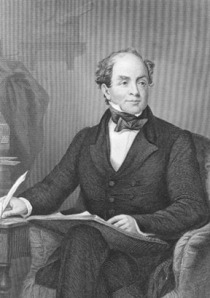
To........ - Thomas Moore
------------------------
To……
When I loved you, I can’t but allow
I had many an exquisite minute;
But the scorn that I feel for you now
Hath even more luxury in it!
Thus, whether we’re on or we’re off,
Some witchery seems to await you;
To love you is pleasant enough,
But oh! ‘tis delicious to hate you!
Thomas Moore- Irish
Saturday, May 15, 2010
Since there's no help, come, let us kiss and part - Michael Drayton

------------------------------------------------------------
Since there’s no help, come, let us kiss and part,
Nay, I have done: you get no more of me,
And I am glad, yea glad with all my heart,
That thus so cleanly, I myself can free.
Shake hands for ever, cancel all our vows,
And, when we meet at any time again,
Be it not see in either of our brows
That we one jot of former love retain.
Now at the last gasp of Love’s latest breath,
When, his pulse failing, passion speechless lies,
When Faith is kneeling by his bed of death,
And Innocence is closing up his eyes,
Now if thou wouldst, when all have given him over,
From death to life, thou might’st him yet recover.
Michael Drayton - English
Tuesday, May 11, 2010
Carnal Knowledge - Thom Gunn

--------------------------------------------------------------
Carnal Knowledge
Even in bed I pose: desire may grow
More circumstantial and less circumspect
Each night, but an acute girl would suspect
That my self is not like my body, bare.
I wonder if you know, or, knowing, care?
You know I know you know I know you know.
I am not what I seem, believe me, so
For the magnanimous pagan I pretend
Substitute a forked creature as your friend.
When darkness lies without a roll or stir
Flaccid, you want a competent poseur.
I know you now I know you know I know.
Cackle you hen, and answer when I crow.
No need to grope: I’m still playing the same
Comical act inside the tragic game.
Yet things perhaps are simpler: could it be
A mere tear-jerker void of honesty?
You know I know you know I know you know.
Leave me. Within a minute I will stow
Your greedy mouth, but will not yet to grips.
‘There is a space between the breast and lips.’
Also a space between the thighs and head,
So great, we might as well not be in bed.
I know you know I know you know I know.
I hardly hope for happy thoughts, although
In a most happy sleeping time I dreamt
We did not hold each other in contempt.
Then lifting from my lids night’s penny weights
I saw that lack of love contaminates.
You know I know you know I know you know.
Abandon me to stammering, and go;
If you have tears, prepare to cry elsewhere –
I know of no emotion we can share.
Your intellectual protests are a bore
And even now I pose, so now go, for
I know you know.
Thom Gunn - American
Monday, May 10, 2010
Like Our Bodies' Imprint - Yehuda Amichai
(#6 here from Yehuda Amichai.) It's obvious by now that I like his poetry. A lot. Read the others - just click on his name in the side-bar - and you'll begin to see why. His poems get to the essence and the core with not one extra word. Meeting him that one time and knowing a bit about his life and his writing, he looked to embody a line by Aeschylus: "The reward of suffering is experience". And a lifetime supply of fodder for poems. This one.... this one overwhelmed me on first reading and, even now, decades later, still stuns with its powerful imagery of negative space to show the fullness of what once was.
------------------------------
Like our bodies’ imprint
transl. by Assia Gutmann
Like our bodies’ imprint
not a sign will remain that we were in this place.
The world closes behind us,
the sand straightens itself.
Dates are already in view
in which you no longer exist,
already a wind blows clouds
which will not rain on us both.
And your name is already on the passenger lists of ships
and in the registers of hotels
whose names alone
deaden the heart.
The three languages I know,
all the colors in which I see and dream:
None will help me.
Yehuda Amichai- Israeli
------------------------------
Like our bodies’ imprint
transl. by Assia Gutmann
Like our bodies’ imprint
not a sign will remain that we were in this place.
The world closes behind us,
the sand straightens itself.
Dates are already in view
in which you no longer exist,
already a wind blows clouds
which will not rain on us both.
And your name is already on the passenger lists of ships
and in the registers of hotels
whose names alone
deaden the heart.
The three languages I know,
all the colors in which I see and dream:
None will help me.
Yehuda Amichai- Israeli
Monday, May 3, 2010
Lines Written on a Wall of Dongliu Village - Xin Qiji

-------------------------------------
Lines Written on a Wall of Dongliu Village
transl. from Chinese by Qiu Xiaolong
Wild pear blossoms start falling again,
so soon, the Qingming festival over.
The cruel eastern wind, for no reason,
interrupts a traveler’s dream.
I awake, the brocade curtain
devastatingly cold. Once,
she held the drink to me
on the winding river bank,
and we bade farewell to each other
under a weeping willow tree
with my horse tethered to it.
Now, the pavilion deserted,
there is no trace of her,
only the swallows twittering about bygones.
She’s been seen, people say,
east of the bustling thoroughfare,
behind the curtain, still as graceful
as the new moon. Old regrets
run like the endless spring water. New griefs
pile up like the clouds over the mountains.
If we were going to meet again,
at a banquet, to tell her all this
would be impossible
as to pluck the flower from a mirror.
She would say, perhaps,
"How white your hair has grown!"
Xin Qiji - Chinese
Friday, April 2, 2010
Inca Stones - H. Tao
Though we have been uncoupled for 20 years, today, April 2nd, 2010, would have been my 33rd wedding anniversary. I know because it's the day after April Fool's Day. I tried finding a poem that would be appropriate to the occasion, but was unsuccessful. So, I will intrude one of mine into this humbling company, beg your indulgence, and hope you'll forget it in a week. I wrote it in the early 1990s after her confession.
---------------------------
Inca Stones
I am the ghost by the bedside
watching them
joined like the stones
of Cuzco's Inca walls:
No room between
 for even a blade
of grass.
Lighter than a sigh,
I float on.
Harrison Tao
---------------------------
Inca Stones
I am the ghost by the bedside
watching them
of Cuzco's Inca walls:
No room between
of grass.
Lighter than a sigh,
I float on.
Harrison Tao
Subscribe to:
Posts (Atom)